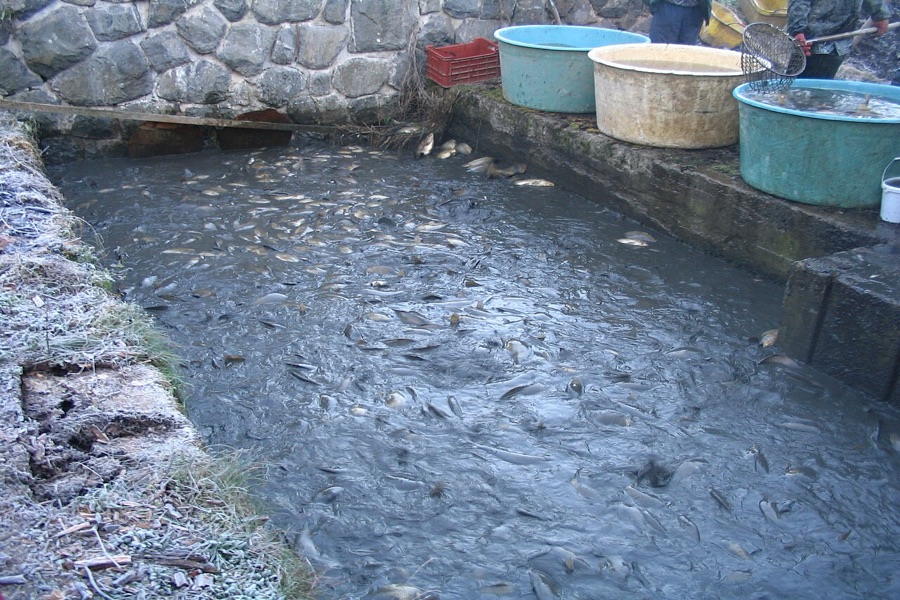
Fish that rub their flanks along the pond bank, dart against the bottom, or flash a side at the surface are telling you something is irritating their skin or gills. The behavior itself is not a disease. It is a symptom shared by several different problems, so the correct response is a short, ordered investigation rather than immediate treatment.
What Rubbing and Flashing Look Like
Occasional scratching is normal in many fish. Watch for a change in pattern: repeated rubbing over minutes or hours, several fish doing it at once, fish clamping their fins while rubbing, or rubbing combined with other signs such as gasping, staying near the inflow, or reduced feeding. The more fish involved at once, the more likely a water-related cause rather than an individual health issue.
The Two Broad Causes
Rubbing behavior comes from two broad sources, and telling them apart early saves time:
- Water irritation. Elevated ammonia or nitrite, a sudden pH swing, suspended sediment after rain or digging, or chemical residues can all burn or itch the skin and gill tissue. Water-caused rubbing often starts suddenly and affects many fish at once.
- External parasites. Organisms such as skin and gill flukes or protozoa irritate the surface tissue. Parasite-driven rubbing tends to build over days, may begin with a few fish, and can come with excess mucus, a greyish film, or visible spots or lesions.
What to Check First
Before reaching for any treatment, run the basic panel:
- Ammonia and nitrite. Any detectable level during rubbing is a strong lead. Review recent feeding, dead fish, and filter performance.
- pH. Compare with your pond's normal morning and afternoon range, not a textbook number. A fast swing of half a unit or more can irritate fish.
- Dissolved oxygen and temperature. Low oxygen pushes fish to the surface and stresses gills already under attack from other causes.
- Recent changes. New water added, lime or fertilizer applied, pesticide drift, or harvested fish can all coincide with new rubbing.
When Water Tests Look Normal
If water quality checks are unremarkable and rubbing continues or spreads, look at the fish themselves. Net two or three affected fish and inspect the skin and fins for excess mucus, pale patches, redness, or spots. Gill color matters: healthy gills are bright red; pale, brownish, or frayed gills need attention. A skin scrape or gill clip examined under a microscope is the reliable way to confirm parasites, and it is a job for a fish health professional or your local aquaculture extension service if you do not have the equipment.
Practical Steps That Usually Help
- Correct any water chemistry problem first — partial water exchange with properly prepared water is the standard first move for ammonia or nitrite.
- Increase aeration while you investigate; irritated gills tolerate low oxygen poorly.
- Avoid pouring in a broad-spectrum treatment before you know the cause. Misapplied chemicals can damage the biofilter and the fish.
When to Call for Help
Contact a qualified aquatic animal health professional or your local fisheries authority if rubbing is accompanied by deaths, if it spreads quickly through the stock, or if skin inspections show lesions or heavy parasite loads. Bringing a fresh fish sample and your recent water readings makes the diagnosis much faster.