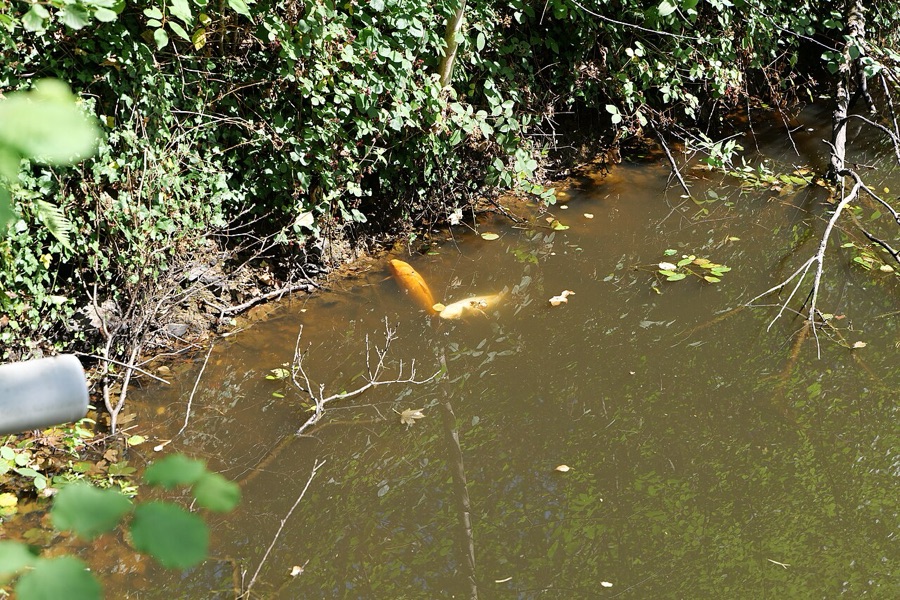
Surface gasping—often called piping—is one of the most urgent behavioral signals in pond and tank aquaculture. The millimeter-thin surface film of water is constantly in contact with atmospheric air, so oxygen-starved fish instinctively rise to skim that top layer.
What Could Be Causing This?
Four main conditions cause fish to gulp at the surface or crowd water inlets:
- Dissolved oxygen (DO) depletion: Heavy phytoplankton respiration overnight, cloudy weather following sunny days, warm water temperatures, overfeeding, or a failed aerator can cause pond DO to plummet—especially between midnight and sunrise. Read our detailed breakdown of what causes low dissolved oxygen in fish ponds.
- Nitrite toxicity ("brown blood" condition): Nitrite enters the fish's bloodstream across the gills and oxidizes hemoglobin into methemoglobin, which cannot carry oxygen. Fish suffocate internally and gasp at the surface even when a dissolved oxygen meter reads normal levels.
- High un-ionized ammonia or extreme pH: Elevated ammonia or sudden high pH irritates and swells delicate gill lamellae, thickening the barrier between water and blood.
- Physical gill damage or gill parasites/bacteria: Heavy suspended solids (floc or clay), filamentous bacteria, or protozoan/monogenean gill parasites coat or erode gill tissue so oxygen transfer fails.
What Should You Check First?
Act quickly and systematically before making chemical changes to the pond:
- Verify aerator and pump operation: Look and listen across the pond or tank house. Has a paddlewheel aerator tripped a breaker, lost a槳 (paddle), or slowed down? Check our guide on why a fish pond aerator is not working properly.
- Measure dissolved oxygen and temperature right away: Test DO at mid-depth and near the pond bottom, not just right next to a running aerator.
- Note the time of day: Gasping that peaks at dawn and improves by mid-morning is classic dissolved oxygen depletion. Gasping that persists all afternoon despite strong aeration points toward nitrite, ammonia, or gill pathology.
- Test nitrite, total ammonia, and pH: Use a fresh liquid test kit or photometer to check whether nitrogen compounds have spiked. See how to recognize ammonia problems in fish farming.
- Observe gill color on a freshly netted fish: Healthy gills are bright cherry red. Pale, mucus-covered, clubbed, or chocolate-brown gills indicate chemical or biological gill impairment.
How to Tell the Possible Causes Apart
- Low DO reading + dawn timing + larger fish affected first: Confirms environmental hypoxia in the water column.
- Normal DO reading + brownish gill color: Strongly indicates nitrite toxicity interfering with blood oxygen transport.
- Normal DO reading + Normal ammonia/nitrite + pale, frayed, or excess-mucus gills: Points toward gill parasites, bacterial gill disease, or suspended solid irritation.
What to Do Next
Stop all feeding immediately—digesting feed sharply increases a fish's oxygen consumption and ammonia excretion. Run all available emergency aerators and direct clean, oxygenated makeup water into the zone where fish are congregating, taking care not to stir up anoxic bottom sludge into the water column.
When to Get Professional Help
Do not dump algaecides, copper compounds, or unverified chemical treatments into a pond where fish are gasping—killing algae or irritating gills during a low-oxygen event will trigger a massive fish kill. If dissolved oxygen is adequate but fish continue gasping at the surface or dying, contact an aquatic veterinarian or aquaculture extension diagnostic lab to perform a wet-mount gill biopsy and water chemistry verification.