Rainbow trout (Oncorhynchus mykiss) are among the most widely farmed fish in the world, and the reason is practical: they grow fast, accept prepared feed readily, and reach market size in a timeframe most farms find workable. But they are a cold-water species with real requirements — and the difference between a good trout farm and a struggling one is almost always the water, not the fish.
The Species at a Glance
Rainbow trout are salmonid fish native to cold rivers and lakes of North America, now farmed globally wherever suitable water exists. They are streamlined, active swimmers that hold position in flowing water — a body plan that tells you most of what they need. Unlike carp or tilapia, which tolerate warm, still, or turbid ponds, trout were built for clean, cool, moving water and they behave badly without it. Farmed strains are hardy in the sense that they tolerate crowding and handling reasonably well — provided the water itself is right.
Their strengths are real: fast growth on good feed, efficient feed conversion, a well-established market for fillets and whole fish, and decades of farming knowledge behind them. Their main weakness is a narrow comfort zone — they are among the least forgiving of the common farmed species when water quality slips.
Water: The Deciding Factor
Everything about trout farming is downstream of water:
- Temperature. Trout grow best in cool water — roughly 10–18 °C, with many farms finding the sweet spot in the low-to-mid teens. Growth slows below that range, and above roughly 20 °C they stress, feed poorly, and become vulnerable to disease. Summer heat kills more trout operations than almost any other factor — the general temperature picture is covered in how water temperature affects farmed fish.
- Dissolved oxygen. Trout are oxygen-hungry. Most farms aim to keep dissolved oxygen above roughly 5–6 mg/L, with higher being better — a bar well above what warm-water species tolerate, and the subject of what causes low dissolved oxygen in fish ponds.
- Water quality. Ammonia, nitrite, and suspended solids all bite harder on trout than on carp-family fish. Their systems need flow or treatment capacity to keep water clean at the high feeding rates they support.
- Supply volume. Flow-through trout farming in particular needs a reliable, high-volume cold water source — a spring, stream, or well with consistent temperature and flow. This is the resource that decides whether trout farming is even possible on a given site.
Farming Systems
Trout are raised several ways, with one dominating commercial production:
- Flow-through raceways. The classic system — long concrete or earthen channels where fresh water enters at one end and exits at the other. Simple to operate, excellent for trout, and completely dependent on that abundant cold water supply.
- Recirculating aquaculture systems (RAS). Indoor or tank systems that filter and reuse water. They free trout farming from the need for a stream but add real complexity and cost — filtration, oxygenation, and monitoring equipment all become critical.
- Cages and net pens. Trout raised in cages in large cold lakes or reservoirs. Works where the water body provides the temperature and volume the fish need.
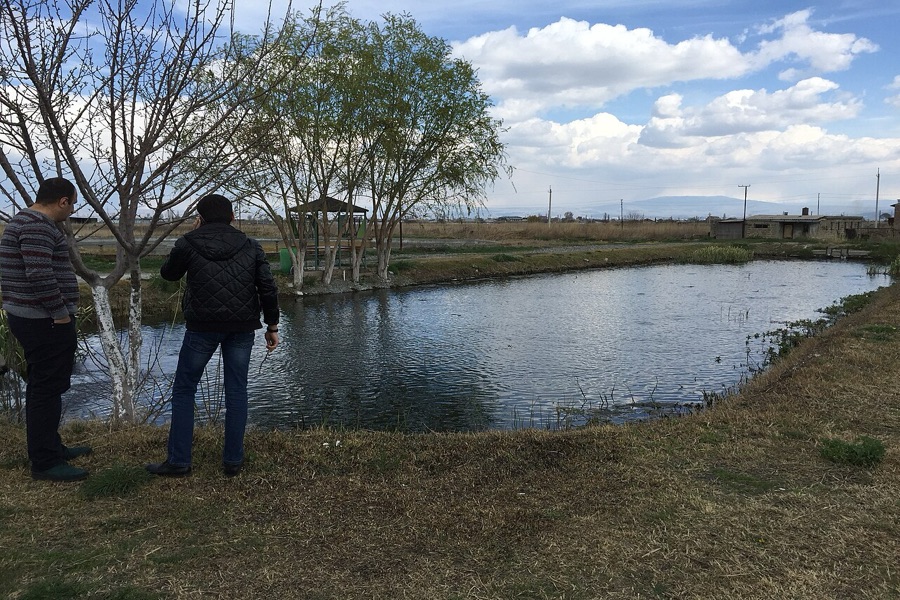
- Small ponds. Possible only where the local climate keeps a pond genuinely cold and well-oxygenated year-round — a condition that rules out most warm or warm-summer regions. Many failed "trout pond" attempts trace back to water that was a few degrees too warm.
Feeding and Daily Management
Trout eat high-protein commercial feeds — typically diets built for salmonids, with protein content considerably higher than what carp or tilapia need. Feeding is usually done multiple times a day for fingerlings and at least daily for growers, with amounts adjusted to appetite and water temperature. Trout feed actively and visibly, which makes appetite one of your best daily health indicators: a sudden drop in feeding response is often the first sign that water or fish health has shifted.
Daily care centers on the water. Check oxygen and temperature regularly — more often than you would for warm-water species, and at more than one time of day, since both swing with weather and feeding activity. Watch for dead fish, since trout losses can move quickly once they start. Keep raceways and tanks clean, and watch screens and intakes for fouling that reduces flow exactly when the fish need it most.
Common Problems
Most trout farming problems are water problems wearing a different costume:
- Summer heat and oxygen crashes. The classic failure — a warm spell drops oxygen exactly when the fish are largest and demand the most. Aeration capacity sized for the worst week of summer, not the average, is what gets operations through.
- Disease under stress. Trout stressed by warm water or low oxygen become vulnerable to a range of bacterial and parasitic conditions. Prevention through water quality beats treatment almost every time.
- Crowding and handling. Trout carry dense loads well when water is perfect and badly when it is not. Handling during warm weather is a common trigger for mortality.
- Feed management. High feeding rates mean high waste loads; a pond or raceway's carrying capacity is set by water quality, not by how much feed you can afford.
Before You Start
The checklist for trout is shorter and stricter than for most species. Confirm a water supply that stays cold and oxygenated through your hottest month — not most of the year, all of it. Visit the intended site during the worst week of summer if you can, thermometer in hand; a spring or stream that is perfect in April may be a different story in August. Line up a market for live or processed fish, since trout sell differently from commodity warm-water species in many regions. And start small: a modest raceway run teaches you the species' real demands far more cheaply than a full stocking does.
Trout Farming Is a Site Choice
Where cold, clean, oxygen-rich water is available, rainbow trout are arguably the most efficient farmed fish to raise — fast growth, great feed conversion, strong markets. Where it is not, no amount of management compensates. Trout farming is less a species choice than a site choice: get the water right and the fish mostly take care of themselves.