Applying a rigid feeding schedule across different fish sizes or seasons leads either to underfed juveniles or polluted grow-out ponds. Adjusting both meal frequency and timing to match the biology of the fish and the daily oxygen rhythm of the water is core to good husbandry.
Key Factors That Determine Feeding Frequency
- Growth stage and gut capacity: Newly hatched fry and small fingerlings have high metabolic rates and tiny digestive tracts; they cannot hold enough food in one meal to last the day and typically require multiple small feedings spread across daylight hours. As fish grow toward market size, their relative metabolic rate slows and gut capacity increases, so daily rations are split into fewer meals (often 1 to 3 times daily depending on species and system).
- Species digestive anatomy: Species with smaller stomachs that graze continuously (such as Nile tilapia—see tilapia farming basics) generally benefit from dividing their daily ration into multiple smaller feedings more than large-stomached benthic feeders like channel catfish.
- Water temperature: Gut transit time (how fast food moves through the digestive tract) slows down in cooler water. When water cools, fish cannot process closely spaced meals and feeding frequency must be reduced. Review how water temperature affects farmed fish.
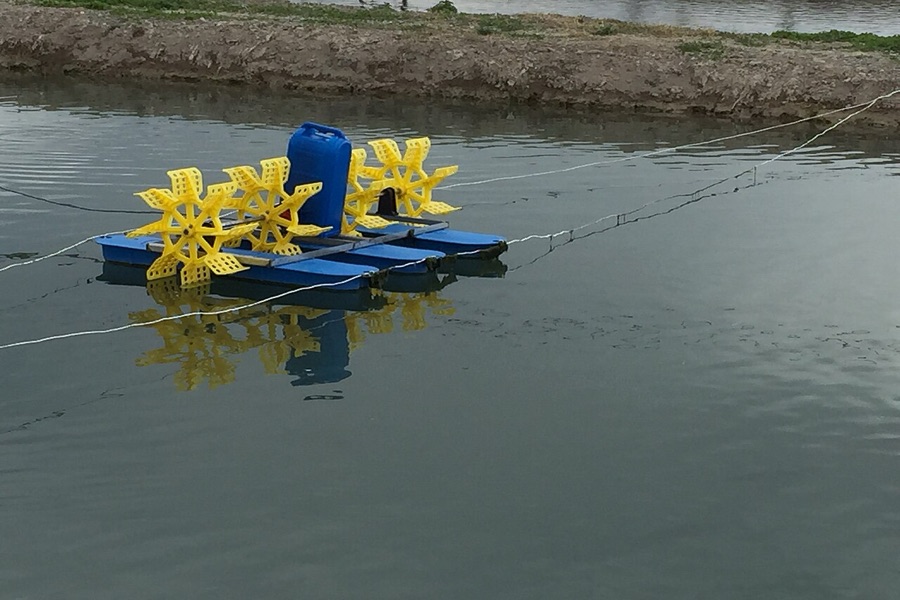
- Daily dissolved oxygen timing: In outdoor ponds, dissolved oxygen is lowest at sunrise and rises as sunlight drives photosynthesis. Feeding too early at dawn—before DO recovers—or too late in the evening—when post-feeding oxygen demand will collide with nighttime respiration—increases hypoxia risk.
What Should You Check Before Every Feeding?
- Check morning dissolved oxygen and water temperature first: Never start the first meal of the day in an outdoor pond until dissolved oxygen has risen to a safe operating level for your species.
- Observe fish surface response on the first test scoop: Throw a small handful of feed and watch how rapidly the school rises before broadcasting the full meal.
- Verify that the previous meal was fully consumed: If floating pellets remain from the morning feeding, skip the afternoon feeding and investigate why fish are leaving feed uneaten.
- Check recent ammonia and nitrite trends: In intensive tanks or RAS, splitting the daily ration into smaller, evenly spaced feedings helps prevent sharp post-feeding ammonia and oxygen peaks.
How to Adjust Schedules When Conditions Change
- Overcast, rainy, or unusually hot afternoons: Reduce or skip afternoon rations in earthen ponds so nighttime dissolved oxygen is not overwhelmed.
- Before grading, netting, or live transport: Withhold feed for 24–48 hours beforehand (depending on water temperature and fish size) so fish have empty digestive tracts, reducing oxygen consumption and ammonia excretion during handling.
When to Get Professional Help
Never rely on a generic internet feeding chart without matching it to your specific fish species, pellet energy density, and water temperature. Consult your feed manufacturer's technical feeding tables or a local aquaculture extension specialist to set up a stage-by-stage feeding and sampling schedule for your farm.